 Thin Blue Mind / Smokey Heroes

Police Psychology | The TRIAD: A Department’s Own Superheroes
Nancy K. Bohl-Penrod, Ph.D., San Bernardino, Calif.
Peer support has been around for ages. In the 1950’s and 1960’s peer support programs began to emerge at the Chicago Police department, the Boston Police department and NYPD. They called those willing 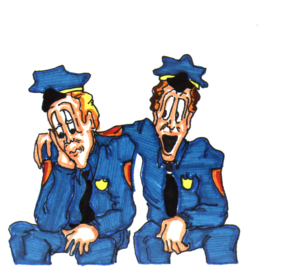 to be in the program “peer counselors”. The programs were originally created, because of the increase in alcohol abuse and the disciplines surrounding the abuse. Their programs followed the Alcoholics Anonymous 12-step program. The peer counselors (supporters) were in “recovery” and it was assumed the best fit to help others with their alcohol problems.
In the 1980’s, formalized, official, peer support programs were developed by LAPD, the San Bernardino Sheriff’s department and the Long Beach police department. It was at this time they changed their names from “counselors to supporters” because it appeared misleading. They were originally set up to assist existing mental health services. Those designated peer supporters would help recognize those officers who were having personal and emotional problems. Similar to an “early detection” program. These departments and their mental health providers, quickly realized the advantages to having trained peer support officers be immediately available. Read the rest of this entry »
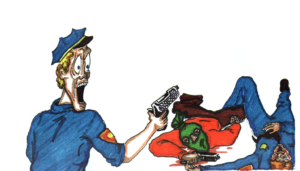 in, it was a “routine stop”. My partner and I had pulled over a truck for a minor traffic offense and during the encounter noticed several gun stickers on the truck (not especially unusual in our city) and some odd behavior from the driver. Something about the man led to me wanting to have him exit the truck. As he did so I attempted to pat him down—which was when it went from “routine” to all hell breaking loose.
 you can add a pint of beer or a shot to the mix and see how hard it is to control the car with the extra drink. Essentially, you feel like you are separate from the vehicle, and the vehicle is doing whatever it wants. Until you crash and burn at the end. You almost always crash and burn or else there was no lesson taught.
 during a physical exam you have high blood pressure or high cholesterol. You may find you can’t sleep at night. You are more irritable and moody than ever before. You are breathing heavily. Your heart rate is through the roof. You are constantly nervous. You worry about everything. You don’t want to make a mistake. Everyone is watching your every move. That’s how I ended up on the floor!